
Last updated October 16, 2026
 Wrought iron
 Wood & steel frame
 Farm & ranch
 Sliding driveway gates
 LiftMaster operators
Free on-site gate assessment - hinges, posts, and your LiftMaster or Nice gate operator checked before anything is quoted
The assessment is free and the quote is the invoice.
Get your free estimateGate Repair Warning Signs: A Tampa Homeowner’s Reference Guide
A gate that hesitates for two seconds before moving isn’t a software glitch. It’s a motor working against mechanical resistance it shouldn’t have, and that two-second delay is burning through what remains of the motor’s service life every single cycle. We’ve rebuilt enough gates in Tampa through our Gate Repair services to tell you this plainly: most catastrophic gate failures announce themselves weeks or months in advance. The problem is that the warnings sound like quirks, look like normal wear, and get dismissed until the gate stops moving entirely or damages a vehicle, a fence post, or a person. This reference maps each warning sign to the component it points to, the timeline you have to act, and what a repair typically costs before the failure escalates. If you live in Tampa, some of these signs will look different here than they do in drier climates, and we’ll cover that too.
Styles & brands we work with
Quick Answer
The most common gate repair warning signs in Tampa are grinding or squealing during movement (pointing to failing bearings or lack of lubrication), slow or hesitant travel speed (indicating motor strain or capacitor degradation), the gate reversing before it reaches the open or closed position (obstruction sensor or limit switch issues), visible post lean or sag at the hinge side (structural fatigue), and clicking sounds without movement (failed capacitor or stripped gear). A homeowner who catches these signs early typically pays $85 to $350 for a component-level repair; ignoring them for two to four months often turns into a $600 to $1,800 motor or hinge replacement.
Table of Contents
- Sound-Based Diagnosis: What Your Gate Is Telling You
- Behavior-Based Diagnosis: Movement Patterns That Signal Trouble
- Visual Inspection Points Every Tampa Homeowner Should Check
- Warning Signs That Mean Stop Using the Gate Immediately
- Signs That Allow a Scheduled Repair Window
- How Tampa Humidity, Ants, and Sand Change the Warning Signs
- What Each Warning Sign Costs to Repair If Caught Early vs. Late
- Common Mistakes to Avoid
- When to Call a Professional
- Frequently Asked Questions
- The Bottom Line
Sound-Based Diagnosis: What Your Gate Is Telling You
Gates are mechanical systems under load, and when a component begins to fail, the first symptom is almost always audible. You don’t need a mechanic’s ear to catch it. You need to know that a gate in good condition makes a consistent, low sound: motor hum, chain or belt movement, wheel contact on the track. Anything that deviates from that baseline is a signal. Here is what the most common sounds point to at the component level.
Grinding or squealing during travel
Grinding in a sliding gate almost always means the drive wheels or carrier rollers have lost lubrication, or a bearing inside the wheel has worn down to metal-on-metal contact. On a swing gate, the same sound points to dry hinge pins or a failing bearing inside the gate operator’s articulating arm. This is a repair you can schedule, but don’t let it ride for months. The friction isn’t just loud; it’s adding load to the operator motor, which was sized for a gate that moves freely. A wheel set replacement on a sliding gate in Tampa typically runs $150 to $350 installed, depending on the gate’s weight and how many wheels have failed. Dry hinge pins are a simpler fix, often under $100, and we handle those as part of routine Gate Repair in Tampa service.
Clicking without movement
A single click or repeated clicking when the gate tries to move and doesn’t is a capacitor failure, a stripped gear, or a dead spot on the motor’s armature. Capacitors are the components that give a gate motor its starting torque. In Tampa’s heat, capacitors fail faster than they do in cooler climates because the electrolyte inside degrades under sustained high temperatures. A capacitor replacement is usually a sub-$150 repair. A stripped gear inside the operator typically means replacement of the gear assembly, which can run $200 to $450 depending on the brand involved, whether that’s a BFT, FAAC, or a domestic unit. If the clicking is accompanied by a burning smell, stop using the gate and cut power at the breaker before making any calls.
Humming with no movement at all
A humming sound that doesn’t result in movement is the motor receiving power but being unable to turn the output shaft. This points to a seized gearbox, a gate that has jumped its track and is binding against the guide, or an obstruction the motor is fighting. The danger here is motor burnout. A motor that hums under load for more than a few seconds at a time is generating heat in the windings. Left like that, the motor burns out entirely and you’re paying for a full operator replacement instead of a mechanical fix. If your gate hums but doesn’t move, cut the power and treat it as a stop-using warning sign. We’ve replaced motors in South Tampa gates that were otherwise fine because a seized wheel went unaddressed for a season.
Chain slap or rattling on a sliding gate
Chain-driven sliding gates use a chain that should remain under consistent tension. When you hear the chain slapping against the rail or the guard, the chain has stretched beyond its service limit, or the tensioner has backed off. That slack produces jerky starts and stops, which transmits shock load into the gearbox and the sprocket. Re-tensioning the chain is a quick service call; replacing a chain that has stretched too far is typically $200 to $400. Either way, the repair is cheaper than the gearbox replacement you’ll need if the slack goes ignored.
Behavior-Based Diagnosis: Movement Patterns That Signal Trouble
Beyond sound, the way a gate moves tells you a lot about what’s failing. These are the behavior patterns we ask about on every diagnostic call, because homeowners usually describe them intuitively: “it’s slower than it used to be,” “it stops halfway,” “it opens on its own.” Each one maps to a likely cause.
Slow travel speed
A gate that moves noticeably slower than it did when new is drawing more current than it should. The causes are mechanical resistance (dry wheels, dry hinges, a bent track segment) or electrical degradation (a weakening capacitor, damaged control board output). Speed loss on its own isn’t an emergency, but it means the system is working harder, and that added strain shortens motor life. We recommend scheduling a service call when you notice the change, not when the gate stops entirely. The diagnostic time is the same either way, but the repair bill is smaller on the front end. For context on how we scope this work, see our Gate Motor Repair in Tampa page.
Intermittent operation
A gate that works fine for three days and then doesn’t respond at all, or only responds when the remote is held at a specific angle, points to an electronics problem rather than a mechanical one. Common culprits include a failing control board, a receiver antenna that has been damaged by Tampa’s afternoon thunderstorms, or a loop detector that is picking up false signals. Intermittent faults are the hardest to diagnose because the system behaves normally while the technician is on site. We approach these by checking for burn marks on the control board, measuring receiver output, and testing the safety loop detection with a vehicle on and off the pad. What a homeowner should not do is assume the problem fixed itself because the gate started working again. It didn’t.
Reversing before fully open or closed
A gate that reverses direction mid-travel is a safety system doing its job. The obstruction sensor, whether a physical edge or a photoelectric beam, has detected something in the gate’s path. If there is nothing visible in the path, the sensor itself may be misaligned, the edge strip may be cracked and filling with Tampa rainwater, or the limit switch that tells the gate when to stop has drifted out of adjustment. A limit switch that is set too tight will stop the gate early and then the controller will interpret the resistance as an obstruction. Adjusting limit switches is a standard service call, typically under $150. Ignoring the reversal means the gate may eventually slam into its end stop at full speed repeatedly, which damages the rack, the chain, and the motor mounts.
Gate drifts or sags when stopped
On a swing gate, a visible droop at the unsupported end when the gate is in the closed position means the hinge side is failing. The hinge post may be rotating in its footing, the hinge pins may be ovaled out from wear, or the gate frame itself may be cracking at a weld point. In Tampa, where the soil is sandy and becomes saturated in the wet season, gate posts settle and rotate more than they do in denser soils. A post that has moved just half an inch changes the geometry of the entire gate. The fix may be as simple as re-shimming the hinges or as involved as resetting a post in new concrete. Catch it early and it’s a half-day repair; catch it late and the gate tears the hinges off the post entirely.
Visual Inspection Points Every Tampa Homeowner Should Check
You don’t need to be a gate technician to do a useful monthly visual check. What you need is to know where failure starts and what it looks like before it becomes a breakdown. We recommend a five-minute walk-around once a month. Here are the points that matter.
Rust at weld points
Rust on a gate in Tampa is not cosmetic. The combination of salt air near the bay and daily humidity cycles means that a break in the paint or powder coat becomes a corrosion point within weeks. Weld joints are the highest-stress parts of any gate frame, so rust at a weld is a structural concern, not just a finish concern. Look closely at the bottom corners of the gate frame, where water pools and sits. If the rust shows flaking or pitting, you’re looking at the early stages of a crack. Wire-brushing and re-painting buys time on surface rust. Pitted rust at a weld may require re-welding and re-finishing. We’ve replaced gate frames in the Bayshore area that failed at the bottom rail because a quarter-sized rust spot was left alone for a year. Iron gates fail slowly; aluminum gates don’t rust but their welds crack, so look for hairline fractures at the joints.
Post lean measurement
You can measure post lean without special equipment. Stand back from the gate and sight down the hinge post against the fence line. If the post is out of vertical by more than about a quarter inch over its height, the post is moving in its footing. A level held against the post makes the measurement more precise. Measure it monthly so you know whether the movement is ongoing. A post that is stable but slightly out of vertical is an alignment issue you can live with, though the gate will wear unevenly. A post that moves a little more each month is a footing problem that will eventually bind the gate or tear out the hinges. In sandy sections of Tampa, we see posts rot at the base specifically because sprinkler heads were aimed at them for years. Sprinkler water is groundwater plus chemicals, and it attacks both steel and wood posts.
Gap consistency at contact points
Stand inside the property and look at the gap between the gate’s leading edge and the post or stop. The gap should be consistent from top to bottom. If the gap is wider at the top than the bottom, the gate is sagging. If the gap closes completely at one point, the gate is binding when it shuts. Both are load problems that transfer directly to the operator. Also check the gate’s track on a sliding gate: the wheels should ride in the center of the track, not against one edge. A gate riding against the edge of its track is a sign that the gate frame is racking, and the wheel bearings are taking a side load they weren’t designed for.
Wheel contact on the track
On a sliding gate, lay eyes on each wheel where it meets the rail. The wheels should turn as the gate moves, not slide. A wheel that skids means the bearing has seized. A wheel with visible flat spots means it has been sliding for some time. A wheel that rocks means the mounting bolt is loose. Any of these conditions justifies a service call. Wheel replacement on a residential sliding gate in Tampa runs $150 to $350 per set depending on the gate’s size and number of wheels, and it’s a repair we performance as part of standard gate repair in Tampa work rather than as a specialty.
Ant mounds and their damage
This is the Tampa-specific check that no generic gate maintenance guide will mention. Florida’s fire ants and ghost ants are drawn to the warmth of gate control boards and the shelter of operator housings. Ants nest inside gate operators, and their bodies and debris short out control boards. The damage looks like small burn marks on the board, or a cluster of dead insects bridging two components. Check around the base of the operator and inside the housing if you can access it safely with power off. Turn the power off at the breaker before opening any enclosure. If you see ant trails heading into the operator housing, have the interior cleaned and consider an exterior bait treatment around the housing’s concrete pad. A board replacement costs $300 to $600. A cleaning costs a service call.
Warning Signs That Mean Stop Using the Gate Immediately
Some signs allow a scheduled repair. Others mean the gate should be stopped and secured until a technician arrives. The distinction matters because continuing to cycle a gate with certain active failures multiplies the repair cost and increases the risk of injury or property damage. Here is the line we draw.
Signs that mean stop using the gate now:
- Humming without movement. The motor is under load and burning. Every second adds heat to the windings.
- Burning smell from the operator. An electrical failure is active. Cut power at the breaker immediately rather than continuing to test.
- Sparks or arcing visible at the operator or any wiring. This is an electrical hazard, not just a mechanical one.
- Gate off its track or hanging from one hinge. The structural failure has happened. The gate is now a falling hazard.
- Sudden loud popping or snapping followed by the gate sitting loose. Something load-bearing has broken: a chain, a hinge pin, a weld.
- Gate reverses at the same point every cycle with no visible obstruction. The safety logic is compromised, and the gate may either trap something or fail to stop when it should.
In each of these cases, the right sequence is: cut power if you can do so safely, secure the gate so it can’t move or fall, and call a technician. Do not run the gate manually through its full travel to “see what happens.” A gate that has come off its track weighs several hundred pounds and will crush a hand or foot if it shifts while you are inspecting it.
Signs That Allow a Scheduled Repair Window
These signs mean the gate is still functional and safe as long as it’s used normally, but a component is approaching the end of its service life. The repair can be scheduled at your convenience, though waiting too long moves the gate into the stop-using category.
- Slow travel speed with no other symptoms. Schedule a diagnostic. The gate isn’t dangerous yet, but the motor is working harder every cycle.
- Grinding or squealing that subsides after the gate runs. Dry bearings or lack of lubrication. Left alone, it becomes wheel or hinge replacement.
- Small amounts of visible rust at non-structural points. Surface rust on the gate frame away from welds can be treated and re-painted.
- Remote range shrinking. The receiver or antenna is degrading. You can still open the gate, but the intermittent failure is coming.
- Thin gap inconsistencies that have been stable for months. A gate that sags slightly but isn’t worsening can be scheduled. Document with photos so you know what’s changing.
The dividing line between schedule and emergency is whether the system is getting worse each cycle. A stable fault can wait a week or two. A fault that changes week to week is active, and the clock is running on the repair bill.
How Tampa Humidity, Ants, and Sand Change the Warning Signs
Tampa doesn’t produce the same gate failures as a dry climate, and the difference matters for what a homeowner should look for. In dry climates, gates fail from dust abrasion and extreme temperature swings. In Tampa, the dominant failure drivers are moisture, insect intrusion, soil movement, and salt air near the bay. Here is how those factors change the warning signs.
Humidity and condensation
Tampa’s average relative humidity runs above 70 percent most of the year, and overnight condensation forms inside operator housings even when it hasn’t rained. That moisture corrodes control board contacts, rusts internal fasteners, and accelerates the breakdown of capacitor seals. The warning sign to look for is corrosion residue on the board itself: a white or green film on the solder points, or rust staining around the housing’s screw heads. Homeowners in New Tampa and Carrollwood see this on gates that are otherwise in good mechanical shape. A control board that has been wet will fail intermittently before it fails permanently, and you’ll see flickering status lights or the gate losing its programmed limits.
Ants and insects
We covered ant intrusion in the visual inspection section, but the broader point is that Tampa’s insect pressure produces operator failures that don’t happen in arid cities. Ants, roaches, and even lizards find their way into operator housings and short out electronics. The warning signs are odd: the gate opens on its own, the remote stops working while the keypad still functions, the gate behaves differently after rain. If you’re seeing behavior that doesn’t match any mechanical pattern, suspect something alive inside the housing. The fix is cleaning and board inspection, not a mechanical overhaul.
Sandy soil and post movement
Large sections of Tampa sit on sandy soils that drain quickly but shift under load. Gate posts set in sand move more than posts set in clay or rock, particularly during the wet season when the ground saturates and loses bearing capacity. The outward sign is a post that leans a little more after every heavy rain. If you’re in an area like South Tampa or near the bay where the water table is high, check your posts monthly during the summer thunderstorm season. Post replacement or re-setting is a bigger job than hinge adjustment, so catching the movement early keeps a $300 fix from becoming a $1,200 excavation and concrete pour.
Salt air near the bay
Homes within a mile or two of Tampa Bay get salt spray, even if they aren’t on the water. The salt accelerates rust on ferrous hardware: hinge pins, chain links, wheel bearings. The warning sign on a sliding gate is a chain that develops surface rust and then stiff links. On a swing gate, it’s hinge pins that creak even after lubrication. Stainless steel hardware costs more upfront but lasts significantly longer in these areas, and it’s the specification we recommend any time we’re replacing hardware on a coastal-adjacent job. For new installations, this is exactly the kind of local factor that a gate installation in Tampa should account for, rather than installing the same package whether the house is inland or on the water.
What Each Warning Sign Costs to Repair If Caught Early vs. Late
Cost ranges in gate repair depend on the gate’s size, the operator brand, and whether the repair is mechanical or electrical. But as a reference, here is what Tampa homeowners typically see for the common failures we’ve covered, comparing the early-stage repair to what happens when the warning sign is left alone.
| Warning Sign | Early Repair Range | Late Repair Range |
|---|---|---|
| Grinding or squealing | $85 – $350 (lubrication, wheel or hinge replacement) | $600 – $1,400 (motor replacement from sustained overload) |
| Clicking without movement | $120 – $250 (capacitor replacement) | $400 – $900 (gearbox or operator replacement) |
| Slow travel speed | $85 – $200 (diagnostic plus mechanical adjustment) | $500 – $1,200 (motor or control board replacement) |
| Reversing before full travel | $100 – $200 (limit switch or sensor adjustment or replacement) | $400 – $1,800 (rack, end-stop, or motor damage from repeated impact) |
| Post lean or gate sag | $250 – $500 (hinge shimming or post re-setting before failure) | $900 – $2,500 (post excavation, gate re-welding, operator re-installation) |
| Rust at weld points | $150 – $400 (treat and re-finish) | $800 – $2,000 (gate frame section re-welding or full frame replacement) |
These ranges reflect what we see across Tampa, including neighborhoods from Westchase to Brandon to Seminole Heights. The pattern is consistent: acting early costs a third to a half of what acting late costs, and acting late often means the operator fails because it was asked to drive a gate that was fighting back. Every repair from our team includes a written price agreed before work starts. The number we quote is the number on the invoice, regardless of what we find once the housing is open. That’s how the Carver Gate Repair Tampa home team has run its gate work since day one, and it’s a policy we don’t bend on.
Common Mistakes to Avoid
- Lubricating the track on a sliding gate as a fix-all. Tracks are designed to run dry, and grease on the track attracts sand and grit, which accelerates wheel wear. Lubricate the wheel bearings and hinge points, not the running surface.
- Assuming a gate that “fixed itself” is fixed. Intermittent faults are active faults. The problem is still there, and it will return at the worst time, likely during a storm or when the gate is blocking a vehicle.
- Replacing the operator without fixing the mechanical issue that killed it. A new motor bolted to a gate with seized wheels will fail the same way the old one did. Diagnose the gate first, then the motor.
- Ignoring rust in Tampa because “it’s just surface.” Surface rust becomes structural rust faster here than almost anywhere else in the continental U.S. due to humidity and salt air.
- Using a pressure washer on the operator housing. Water forced into the housing under pressure gets past seals and shorts the board. Wash the gate, but keep spray away from the operator and any electrical enclosures.
- Waiting until the gate completely stops to search for a repair phone number. Every repair is more expensive when it’s an emergency, and emergency calls in Tampa during summer storm season have longer lead times than scheduled calls.
When to Call a Professional
If you’ve reset the breaker, replaced the remote batteries, and the gate still doesn’t respond normally, the problem is almost certainly beyond what a homeowner should attempt. Gate motors contain capacitors that hold a charge even with power off, and a gate itself weighs hundreds of pounds. The moment you’re opening an operator housing with a multimeter in your hand, you’re working on equipment that can injure you. On the structural side, a hinge pin or post repair on a sagging swing gate involves supporting the gate while hardware is removed, and that’s a job for a crew with the right stands and jacks. In our experience, the homeowners who call early get the smallest bills and the fastest turnarounds. Carver Gate Repair Tampa offers free estimates in Tampa – call (850) 533-8293 and a live person answers, day or night.
Frequently Asked Questions
Most gate repairs in Tampa run between $85 and $350 for mechanical work like wheel replacement, hinge adjustment, and limit switch calibration, while electrical repairs like control board replacement or capacitor swaps typically run $120 to $600 depending on the operator brand. Full operator replacement runs $600 to $1,800 installed. Call (850) 533-8293 for a written quote specific to your gate before any work starts.
A humming sound without movement means the motor is receiving power but can’t turn the output shaft, which points to a seized gearbox, a bound chain, or a gate that has jumped its track and is binding. Cut the power at the breaker to prevent motor burnout and call a technician. This is a stop-using situation, not a schedule-it-next-week situation.
A gate that slows down is drawing more current than normal, which means mechanical resistance (dry wheels, dry hinges, a bent track rail) or electrical degradation (weakening capacitor, failing control board output). The gate can still be used briefly, but the added strain is shortening the motor’s life every cycle, so schedule a diagnostic within a week or two.
No, not necessarily. Grinding points to the mechanical side: carrier wheels, hinge pins, or the operator’s gear assembly. If the grinding is caught early, the repair is often a wheel or bearing replacement under $350. The motor is only replaced if the grinding has been ignored long enough to burn out the windings, which is why addressing the sound early matters.
Yes. Call (850) 533-8293 and a live person schedules the call; we don’t route you through a voicemail box. Emergency repair calls, including gates stuck open or off their track, are prioritized for same-day dispatch. For non-emergency diagnostics and scheduled repairs, you’ll get a set arrival window and a written price before work begins.
Our technicians are trained on nine gate-motor brands, including FAAC, BFT, Linear, and Viking, so the parts and programming match the system already installed at your house rather than a generic replacement. Each Carver Gate Repair Tampa location is held to the same standard of written pricing, background-checked technicians, and a full-year written guarantee on every repair.
The Bottom Line
Your gate will tell you when it’s failing, and the tell is almost never a sudden stop. It’s the two-second hesitation, the grinding from the wheel assembly, the click that doesn’t turn into movement, the post that leans a little more after each rain. In Tampa’s humidity and sandy soil, those signals show up earlier and progress faster than the national averages. The discipline that saves money is simple: check the gate monthly, document what changes, and call when the change is active rather than when the gate is dead. For a complete maintenance calendar, see our Seasonal Gate Repair Care for Tampa: Year-Round Homeowner’s Guide. A repair caught early costs a fraction of the operator replacement that comes later, and the service call gives you a written price before any work begins.
Written by Lonnie Burke, Owner at Carver Gate Repair Tampa, serving Tampa since 2008.
See the difference
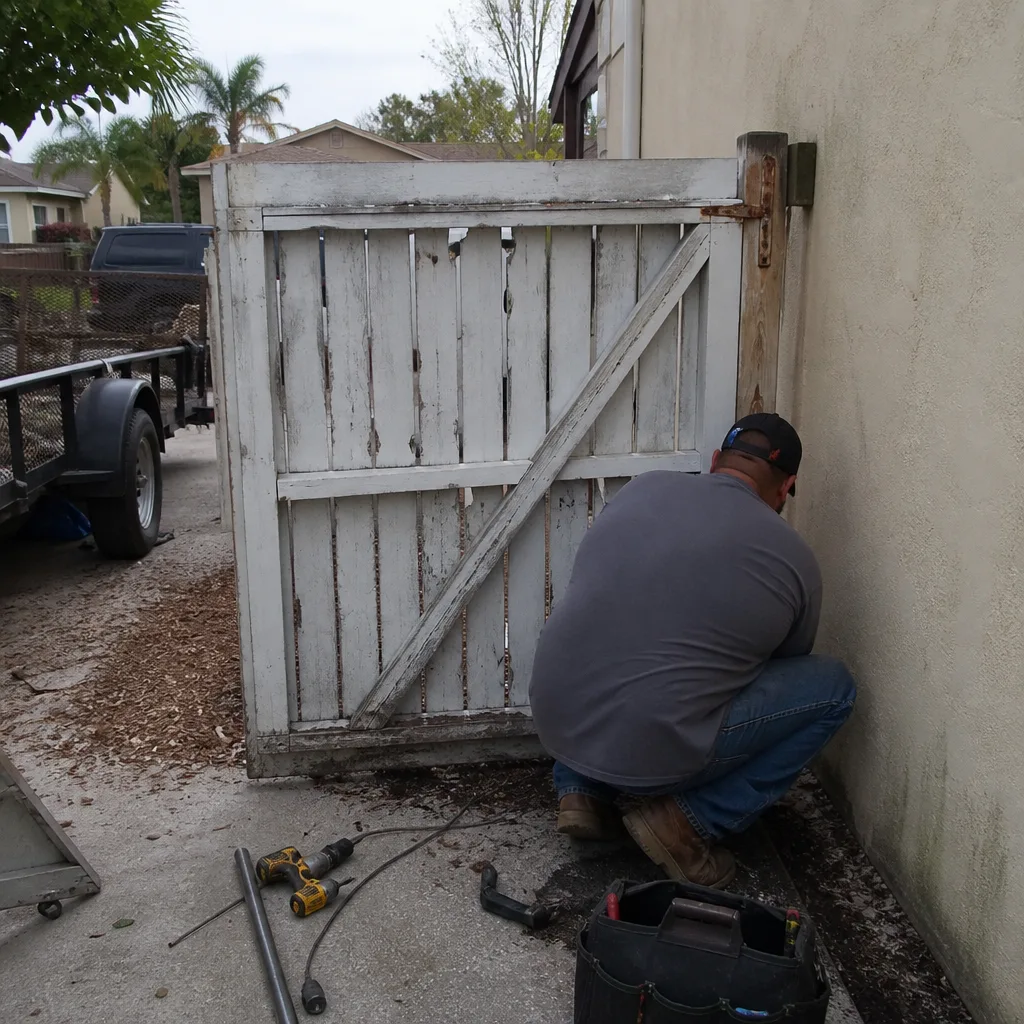 Before
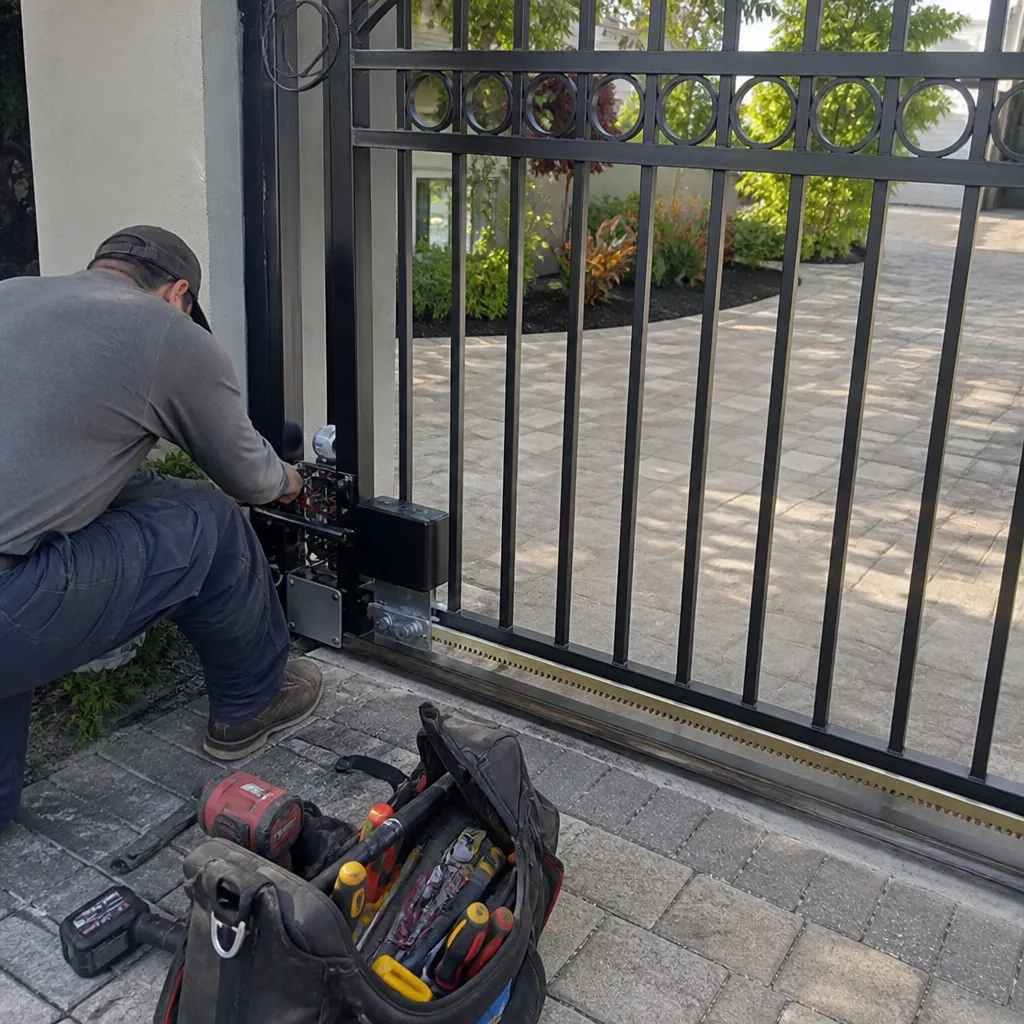
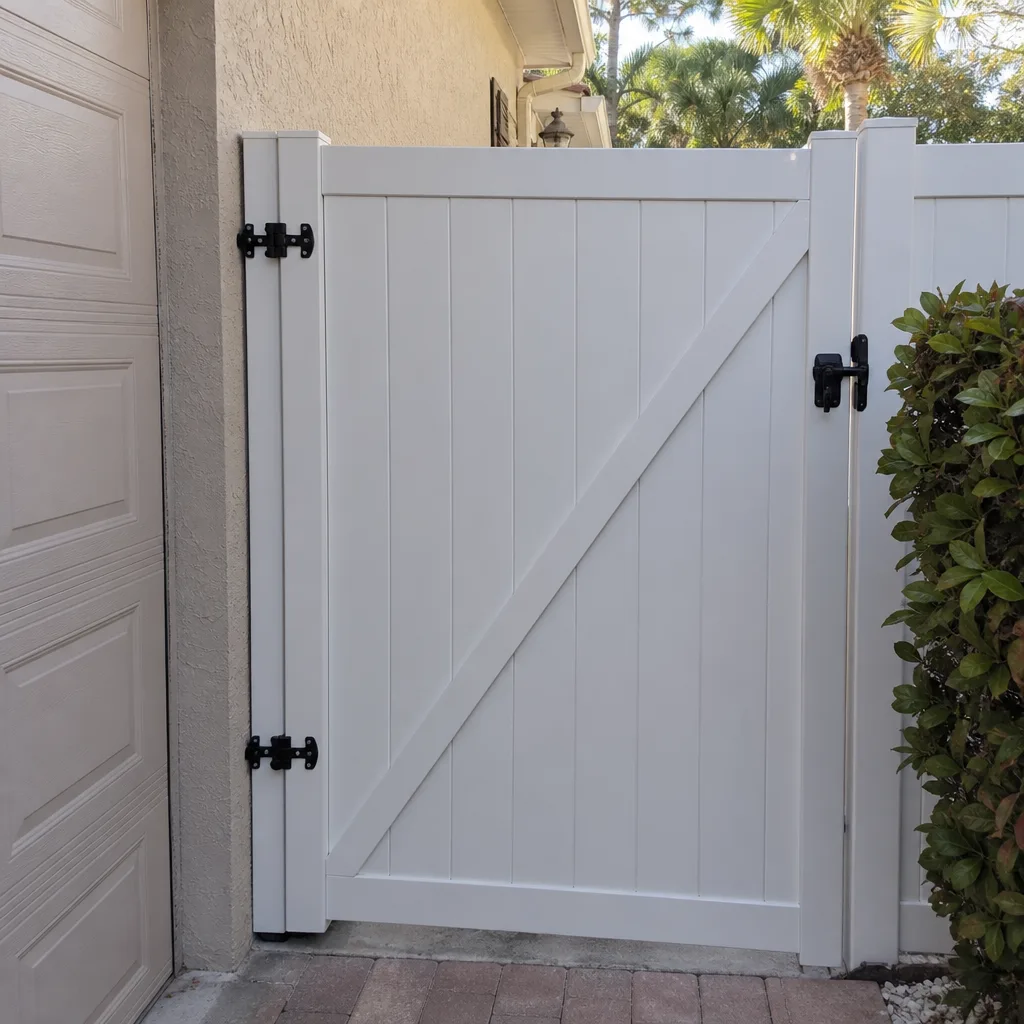 After
After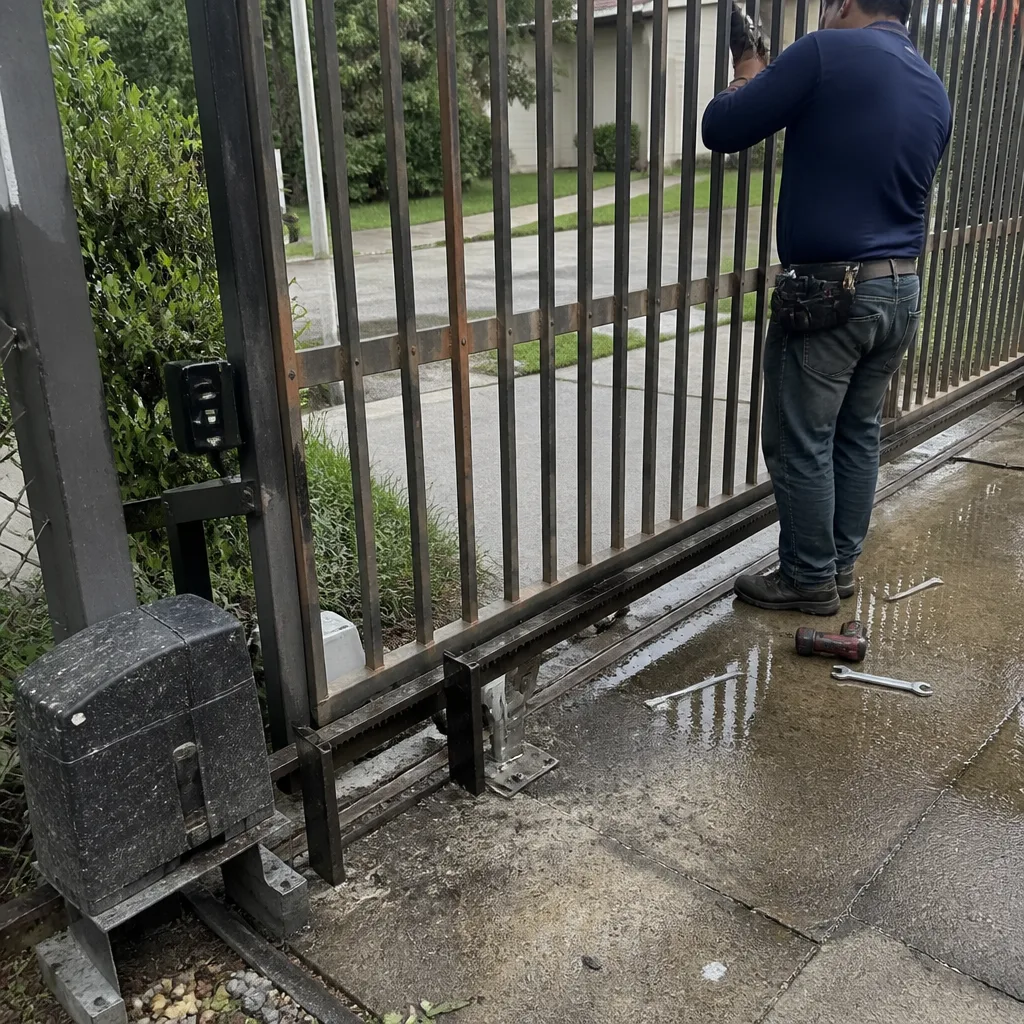 Before
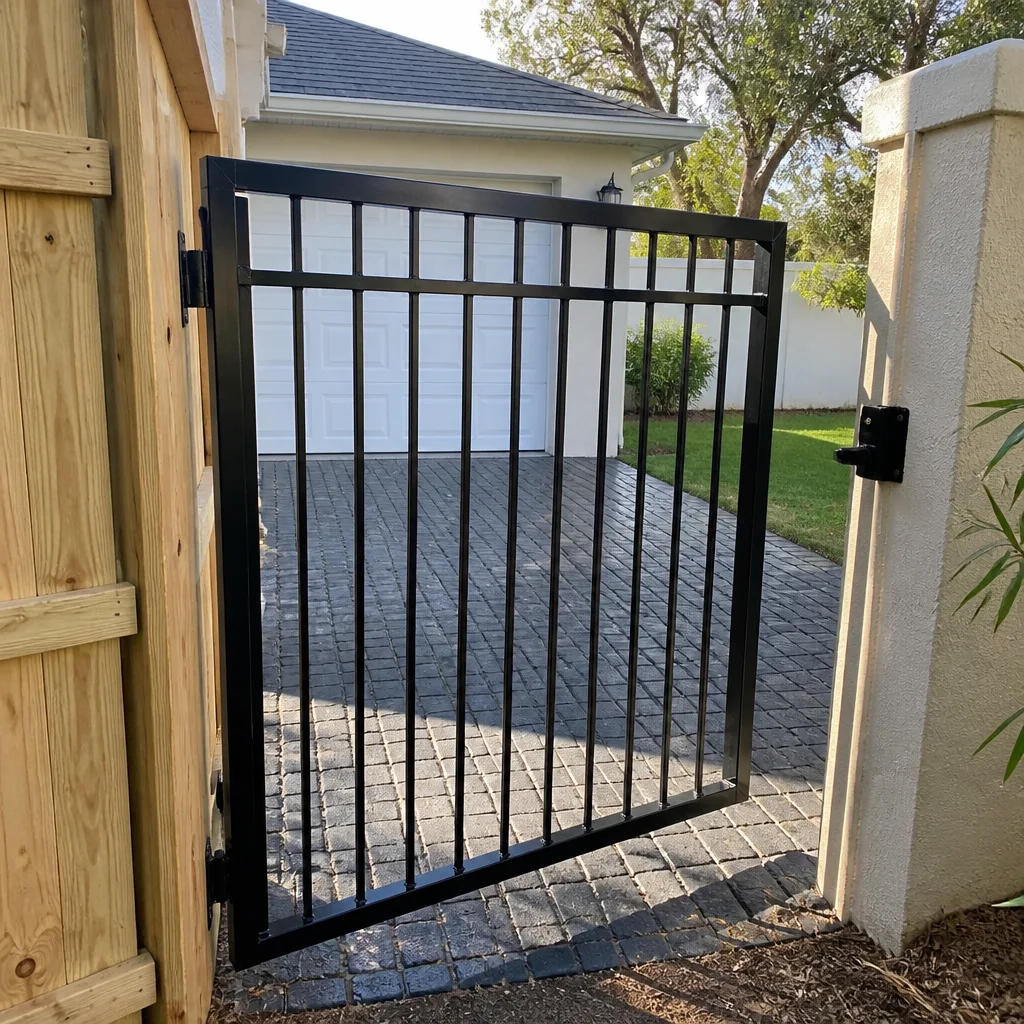 After
After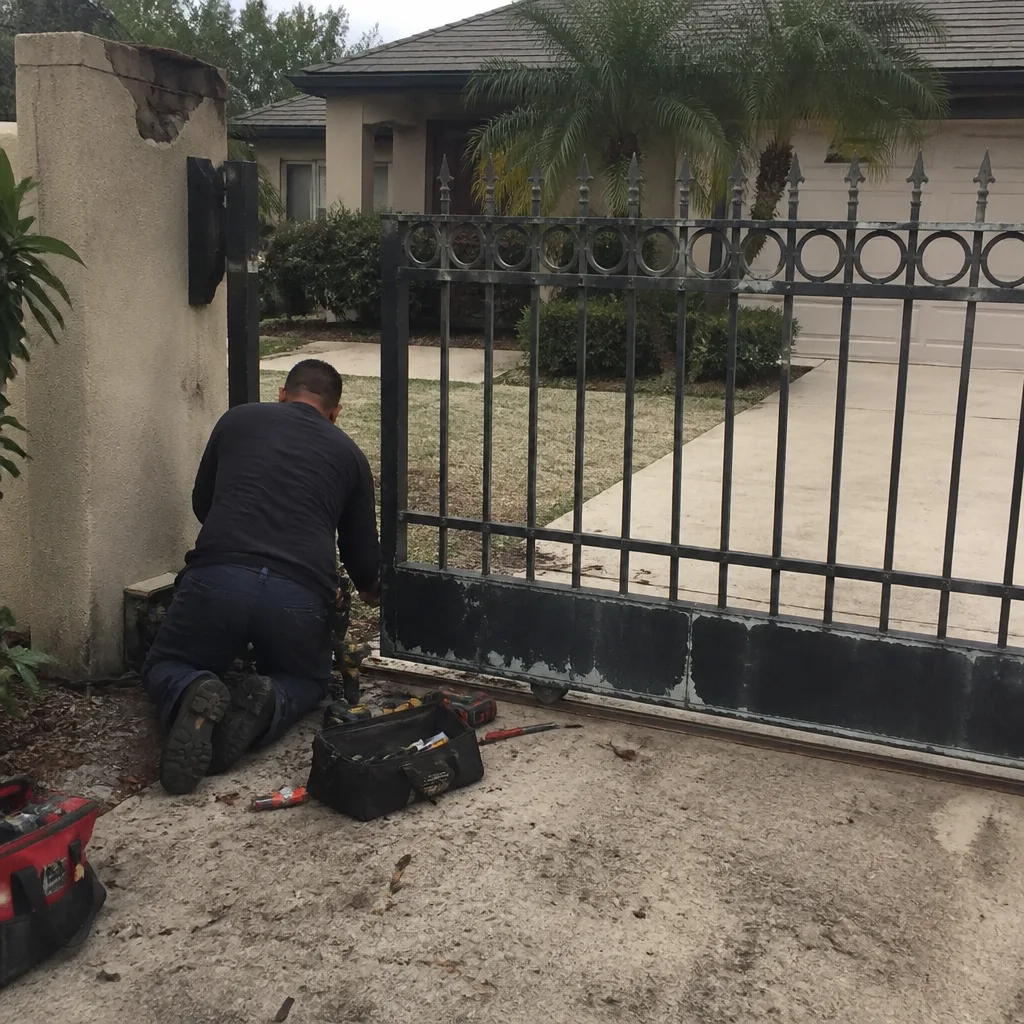 Before
 After
After